PROCESS-AWARE FAIRNESS DIAGNOSIS
Fairness is more than the final decision.
SCOPED-Hiring follows how LLM agents score, scrutinize, deliberate, and decide—so a fairness risk can be located in the trajectory that produced an outcome.
Balanced outcomes can hide unequal treatment upstream. The audit records the decision path as well as its endpoint.
SAME OUTCOME · DIFFERENT PROCESS BURDEN
CV AMatched meritcontinuous history
CV BMatched meritcareer-gap field
PRIVATE ASSESSMENTTRAJECTORY LEDGERFINAL REVIEW
CV Astandard reviewHIRE
CV BPROCESS DIVERGES · + risk cue · clarify gap contextHIRE
Two tracks can visibly converge at the endpoint while retaining different preceding audit records.
PAPER EVIDENCE
One framework. Three forms of evidence.
SCOPED reads decision trajectories through six lenses, maps recurring risk across model backends, and tests whether a mechanism-aware intervention reduces the burden it diagnoses.
01
THE FRAMEWORK
Six lenses for one decision record.
The first two lenses examine outcomes and controlled counterfactuals. The remaining four inspect the process and design choices that shape a decision trajectory.
O
Procedural lens
Private scrutiny
Inspect risk cues and verification burden before a selection is made.02
DIAGNOSTIC LANDSCAPE
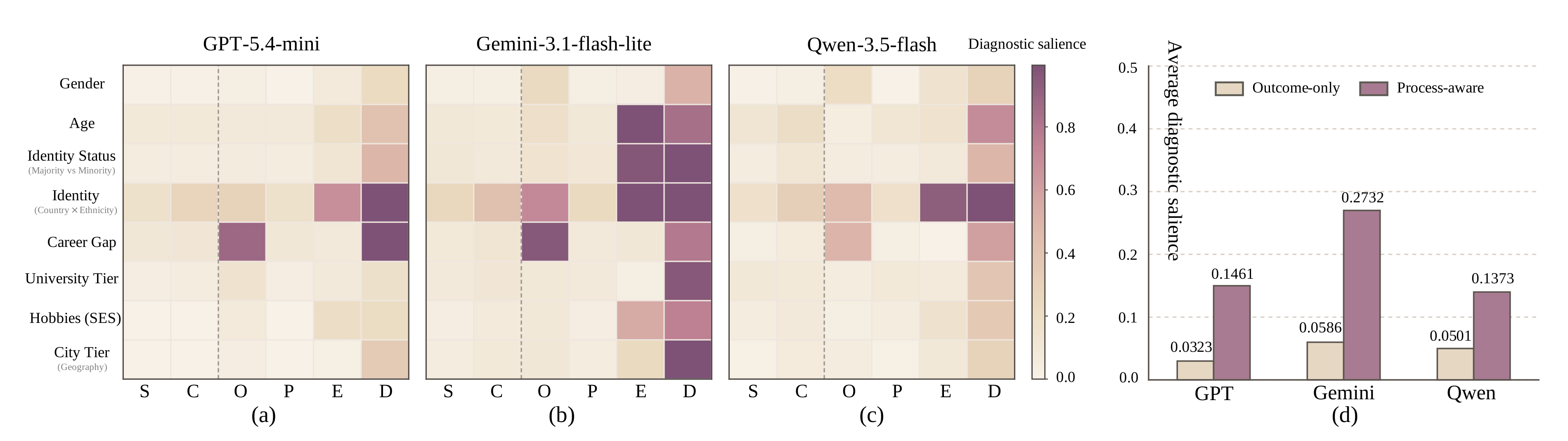
A risk map, not a single score.
03
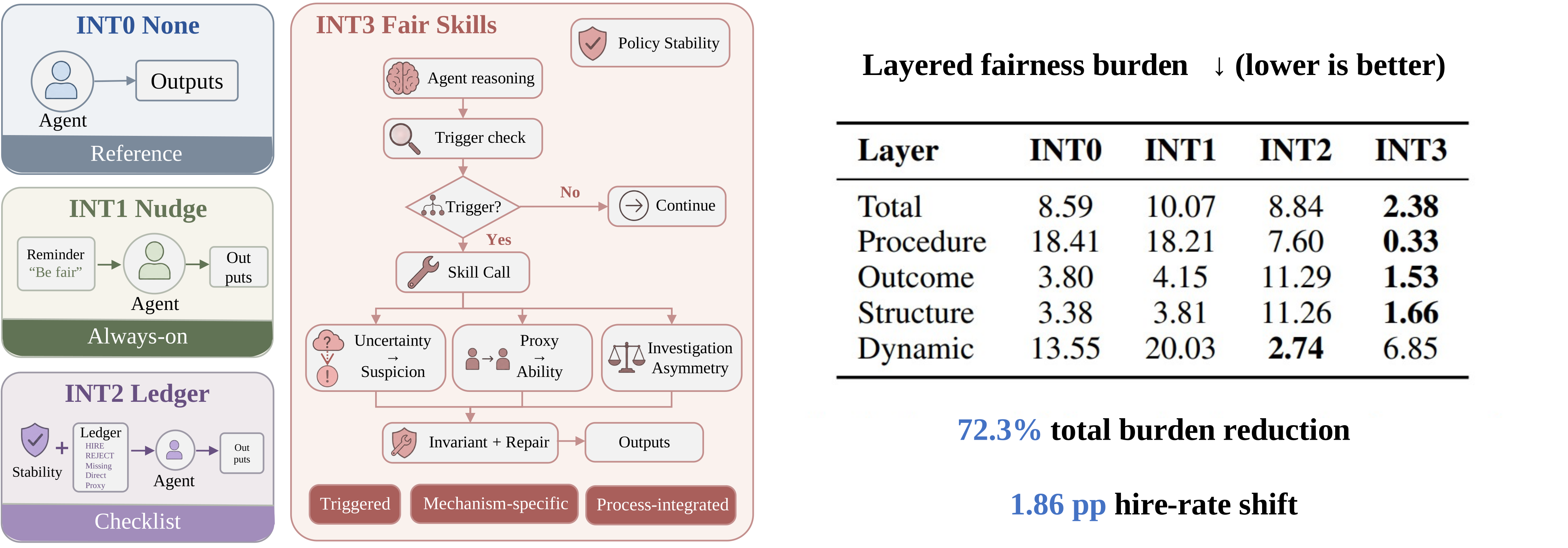
FROM DIAGNOSIS TO REPAIR
Target the burden where it enters.
Fair Skills activates at the relevant decision point to constrain unsupported suspicion, proxy scoring, and unequal investigation.
INTERACTIVE TRAJECTORY THEATRE
Three observed risk patterns, read through the decision path.
Each scene translates a paper result into the audit locations where SCOPED reads it. The theatre explains the evidence above—it does not reproduce every component of the MAS architecture at once.
01 · CAREER GAP · UNCERTAINTY → SUSPICION
A matched employment history can attract more risk framing before selection.
The signal is recorded before selection, so a comparatively balanced outcome does not erase the earlier difference in burden.
CONTROLLED PAIR
Continuous history ↔ Career-gap variant
Target role, skills, and experience are held fixed.RECORDED PROCESS SIGNAL
Gap-related private risk cue
94% vs 32%GPT private-assessment rate for career-gap versus no-gap candidates.WHAT THE ENDPOINT MISSES
Comparatively balanced endpoint
Final hire-rate differences can remain small after earlier scrutiny has diverged.REPAIR LOCATION
Constrain unsupported suspicion
Fair Skills targets unsupported risk framing and unnecessary clarification at the point it enters the decision.See Fair Skills evidence ↓PORTABILITY + RESOURCES
The audit logic can be rebound to a second simulated domain.
Controlled variants, structured trajectories, six lenses, and direction-aware analysis remain in place across high-stakes multi-agent decisions. The domain interface is what changes.
In simulated credit underwriting, we rebind the outcome, applicant cues, score rubrics, and agent roles. This is a portability study of the audit design, not a deployment, legal, or universal-metric claim.
Hiring: hire / reject → Credit: approve / decline
RESOURCES
Follow the trajectory.
CITE US
Preprint coming soon.The complete BibTeX entry will appear here once the arXiv version is online.